Charting Progression Systems in Handheld Casino Formats: Merging Instant Payouts with Reel Spins, Dealer Engagements, and Sports Projections
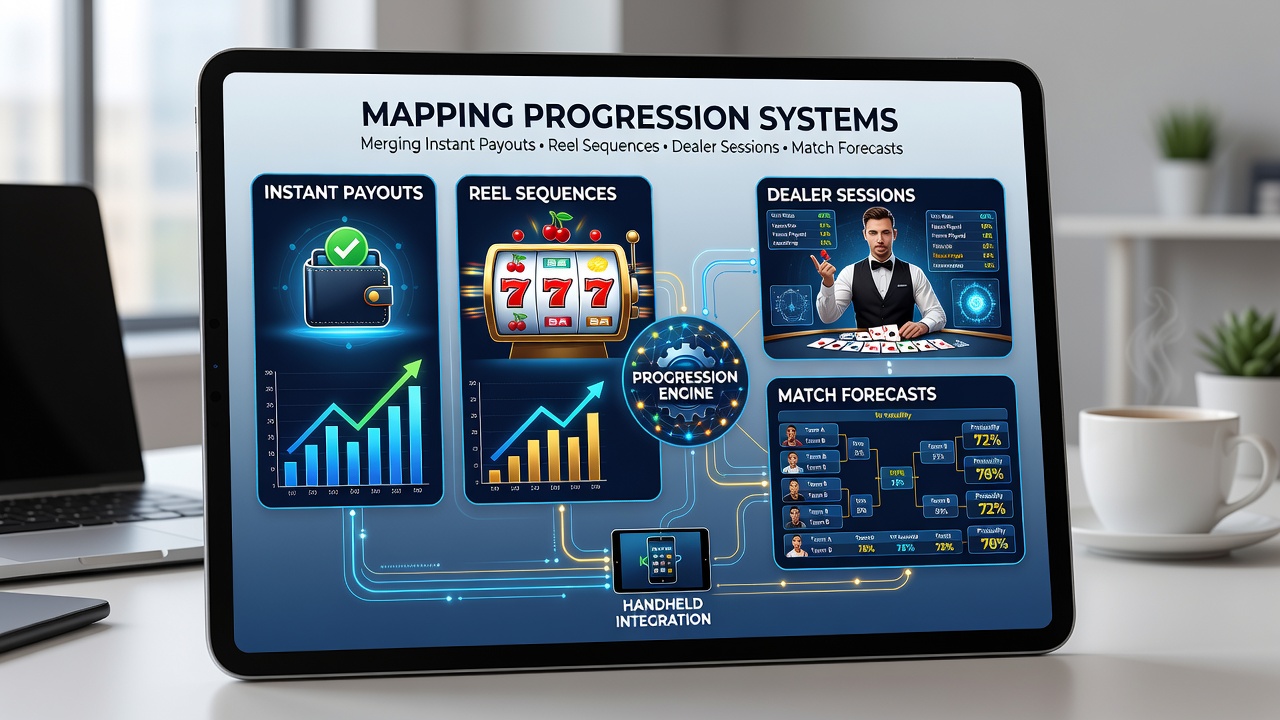
Progression systems in handheld casino formats connect instant payout mechanisms directly to reel sequences, dealer sessions, and match forecasts, creating unified reward structures that operate across mobile applications. These frameworks track player activity in real time while advancing users through defined tiers based on cumulative engagement metrics. Data from industry reports shows that such integrations allow seamless transitions between game types without resetting accumulated progress points.
Core Elements of Mobile Progression Frameworks
Reel sequences form the foundational layer in many mobile systems, where spinning mechanics generate base progression credits that feed into broader loyalty pathways. Observers note that these sequences often link directly to instant payout protocols, enabling immediate crediting of winnings to user accounts once specific spin thresholds are met. Dealer sessions add another dimension, incorporating live table interactions that contribute to the same progression ledger through separate tracking modules for rounds played and outcomes achieved.
Match forecasts extend the system further by incorporating predictive elements from sports events, where accurate projections on upcoming fixtures award additional advancement markers. According to analyses from the American Gaming Association, mobile platforms that combine these three elements report higher session continuity rates because players move fluidly between spinning reels, engaging dealers, and placing sports projections within a single interface.
Instant Payout Integration Mechanics
Instant payout features operate through automated verification layers that confirm transaction eligibility within seconds of a qualifying event, whether that event stems from a reel sequence completion, a dealer session result, or a successful match forecast. Those who've examined platform architectures indicate that the linkage occurs via shared application programming interfaces that update a central progression database simultaneously across all three categories. This setup prevents fragmentation where one activity type might otherwise stall advancement in another.
Platforms achieve this by assigning weighted values to each category, so a high-volatility reel sequence might accelerate progression at a different rate than a sustained dealer session or a multi-leg match forecast. Researchers at institutions studying digital gaming interfaces have documented how these weights adjust dynamically based on regulatory parameters in various jurisdictions, maintaining compliance while preserving system responsiveness.
Cross-Category Progression Mapping
Mapping exercises reveal that successful systems create visual dashboards within handheld applications that display unified progress bars spanning all three activity types. Users see how reel spins contribute alongside dealer rounds and sports projections toward the next tier unlock, which typically includes enhanced payout speeds or expanded betting limits. Figures from the International Center for Gaming Regulation indicate steady adoption of these unified maps in markets outside traditional regulatory strongholds, with implementation dates accelerating through mid-2026.
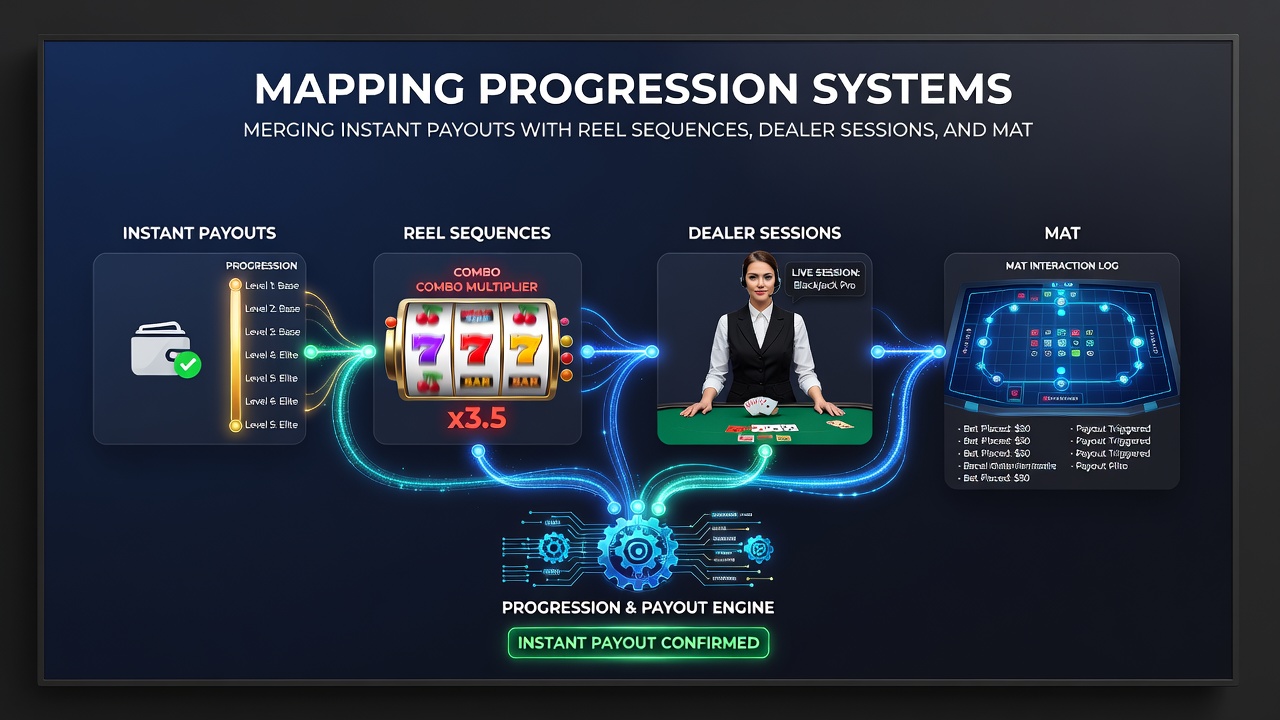
Take one documented case where a platform updated its mapping protocol in July 2026 to include real-time synchronization between sports projections and table sessions, resulting in measurable increases in cross-category participation without altering core payout timing. The update relied on existing instant disbursement rails to maintain consistency, ensuring that forecast-based rewards processed at the same speed as reel or dealer outcomes.
Technical Architecture Supporting Unified Systems
Backend structures rely on modular databases that tag each transaction with category identifiers while routing them through a common progression engine. This engine calculates tier advancement using algorithms that factor in frequency, stake size, and outcome accuracy across reels, dealers, and forecasts. Those monitoring platform performance note that the architecture supports fallback mechanisms, so temporary disruptions in one category do not halt overall progression tracking.
External linkages to payment processors enable the instant payout component, with verification calls occurring in parallel to progression updates. Reports compiled by the Canadian Gaming Association highlight how such parallel processing reduces average reward delivery times across integrated mobile environments while preserving audit trails required for regulatory oversight.
Conclusion
Progression systems that merge instant payouts with reel sequences, dealer sessions, and match forecasts continue to evolve within handheld formats through refined mapping techniques and shared data layers. These developments maintain distinct activity tracking while delivering cohesive user advancement pathways. As platforms refine these connections, the emphasis remains on technical compatibility and regulatory alignment across diverse operating regions.